A CMS decision often begins with familiar platform names. A stronger starting point is the work your team needs to do: publish a landing page, manage translations, update a catalog or connect content with a sales process. The right platform supports those jobs without creating unnecessary operational friction. A useful evaluation includes editors as well as developers.
Map the people and content
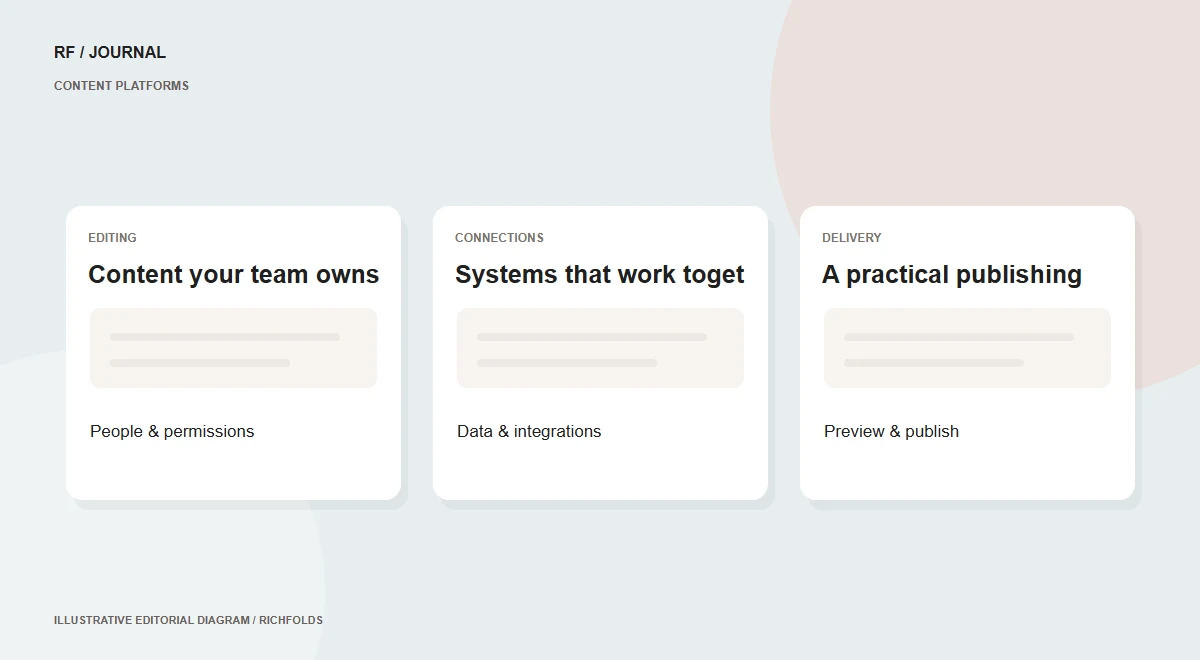
List who creates, approves and publishes each content type. Identify what must be reusable: product attributes, author profiles, case studies or support articles. Ask an editor to complete a representative task in a prototype. A platform that looks flexible to a developer may still make a simple change difficult for the team using it daily.
Compare the complete system
WordPress, Webflow and HubSpot support different implementation approaches, but a platform name does not determine the result. Review the theme, content model, permissions, forms, search and hosting. For ecommerce, include orders, payments and inventory. Record which requirements are built in, which need an extension and which require custom development.
Decide whether headless solves a real need
Separating content management from presentation can help when structured content serves several experiences or when the frontend has unusual requirements. It introduces additional work around previews, routing and deployments. Ask who will maintain those parts. A well-designed CMS theme can be more practical when the business mainly needs an editable website.
Estimate ownership beyond launch
Include recurring fees, hosting, subscriptions, integration maintenance and editorial training. Ask how content can be exported and what happens when a vendor or developer relationship changes. Describe who owns updates and how a change reaches production. The lowest build price does not automatically create the lowest operating cost.
Build a small proof of concept
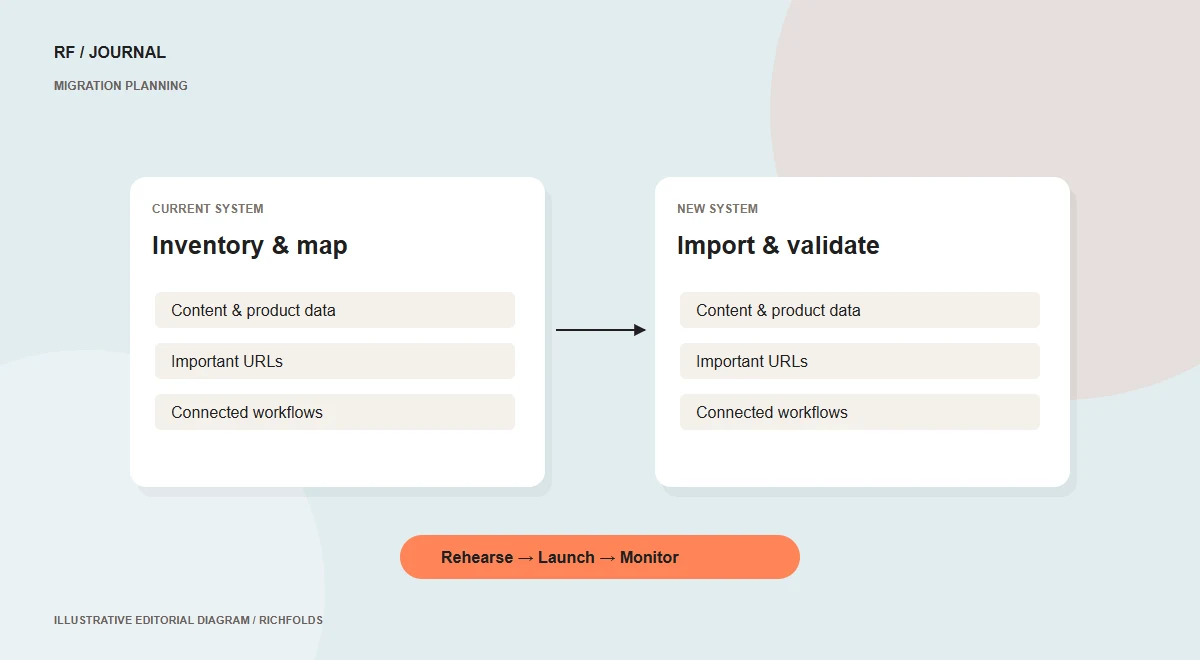
Implement one representative page and one important integration before committing to the whole site. Test mobile behavior, editor permissions, form delivery and previews of unpublished content. Document compromises and involve the client in the decision. The result should be a reasoned recommendation that fits the business rather than a preference presented as a universal answer.
Continue reading
Sources & further reading
Published 13 October 2026. Check current platform documentation before implementation.