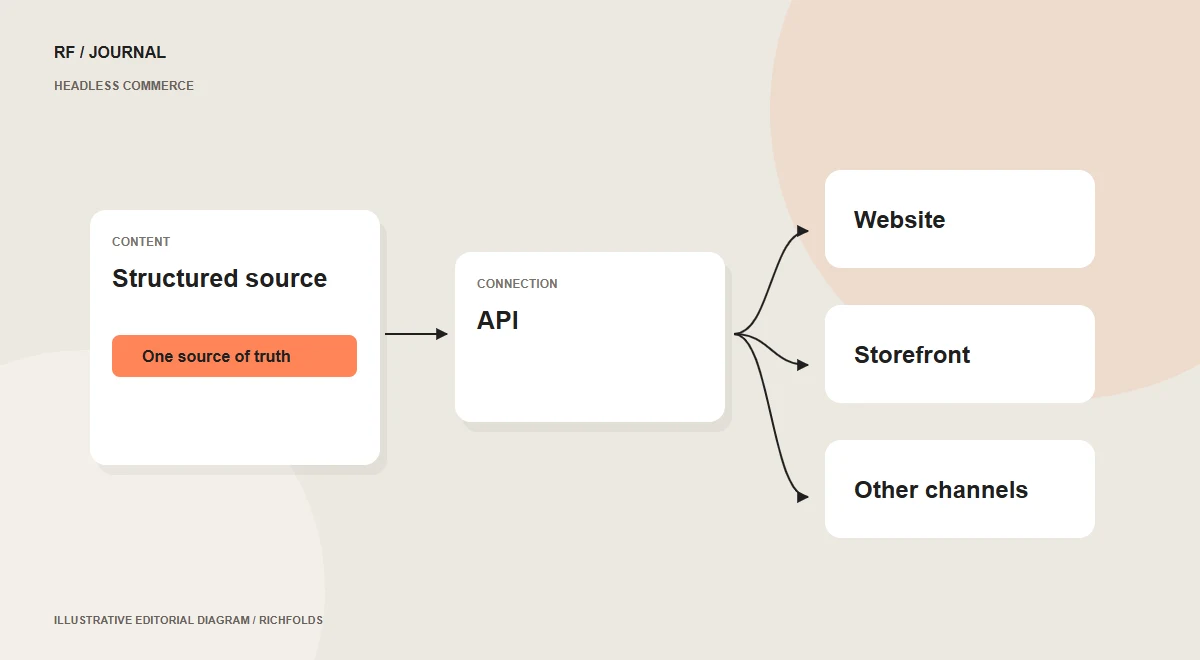
Headless commerce separates the shopping interface from the commerce systems behind it. That can support a customized experience or several ways to reach the same catalog. It can also introduce more components to maintain. The decision should follow business requirements, with a clear account of the editorial experience and the people who will own the architecture after launch.
Define the need for separation
Write down what the existing storefront cannot reasonably do. Requirements might include several channels, a complex content experience or an unusual interaction model. Distinguish a platform limitation from a poorly implemented theme. A custom theme, smaller integration or better product data may solve the problem without separating the frontend.
Understand what stays in the commerce platform
The backend retains essential commerce information and processes. The frontend must use supported APIs and respect requirements for carts, checkout and customer accounts. Shopify and BigCommerce document headless approaches, but their integration details differ. Confirm the APIs, permissions, plan requirements and checkout constraints before designing the solution.
Include publishing and previews
Editors need to know where information lives, what can be reused and how to review unpublished changes. If a separate CMS supplies editorial content, define its relationship to products and categories. Test the complete publishing journey, including an update affecting both product data and page content. Preview support is a delivery requirement, not a finishing detail.
Plan failure behavior and ownership
List the services the frontend depends on and decide what happens when one is slow or unavailable. Include caching, monitoring, deployments and rollback procedures. Assign responsibility for API changes and integration errors. The client should know which updates require development and who resolves incidents after launch.
Compare a smaller alternative
Build a representative flow in the proposed architecture and compare it with the simplest credible alternative. Assess customer experience, editorial effort, operating cost and maintainability. Headless is useful when extra control addresses a real need and the business can support the ongoing work. Document the decision so it remains understandable after the initial build team moves on.
Continue reading
- How to choose a CMS around the way your team works
- A practical migration plan for CMS and ecommerce websites
Sources & further reading
Published 13 October 2026. Check current platform documentation before implementation.