Changing a button color is easy. Learning whether the change improves a business outcome takes a more deliberate process. A useful A/B test begins with a question about customer behavior: what is preventing the visitor from taking the next step, and why should a specific change help? That question determines the design, measurement and decision you can make afterward.
Write a hypothesis you can challenge
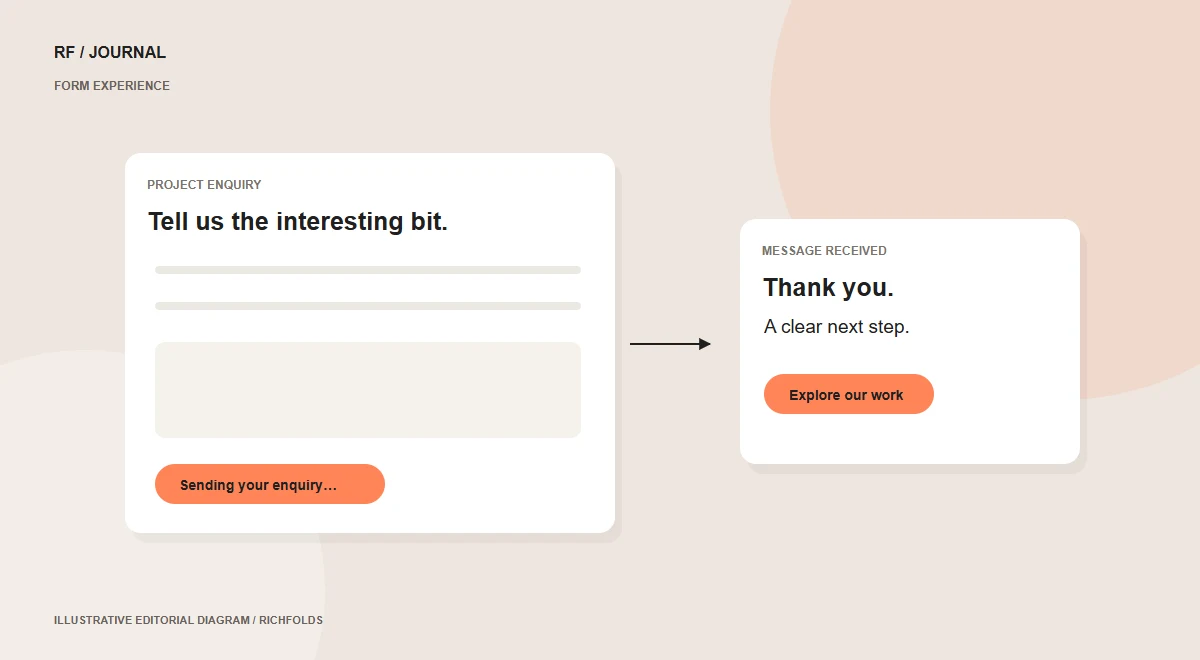
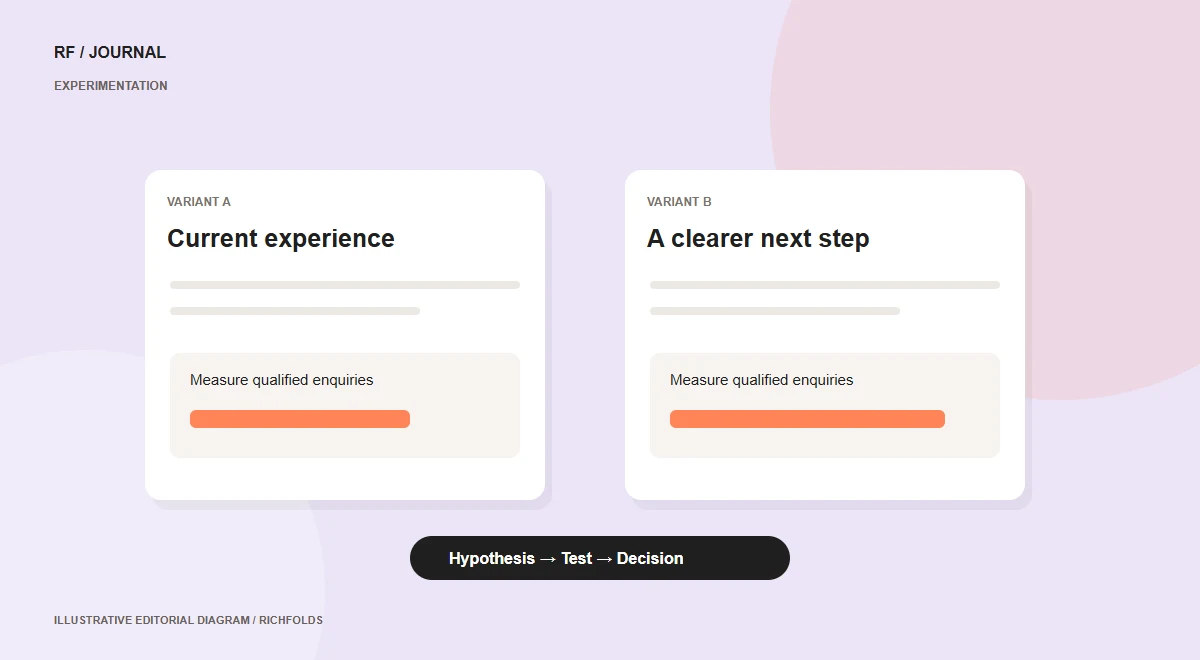
Describe the audience, observed friction, proposed change and expected outcome. Visitors to a service page may hesitate because the form does not explain what happens next. A version that explains the response process could improve completed, qualified enquiries. This is a hypothesis to investigate, not a promise that reassurance will increase conversions.
Choose the outcome before the experiment
Select one primary metric that reflects the decision. A form experiment might use completed enquiries per eligible visitor, with spam rate and lead quality as guardrails. Button clicks alone can mislead if fewer people finish. Define how events and repeat visits are recorded. Check instrumentation on both versions before the experiment.
Make assignment consistent
Visitors should receive a consistent experience, and the intended allocation should be checked against the actual traffic split. Decide whether assignment uses a visitor, account or another unit that matches the question. A logged-in customer using several devices may need a different approach from an anonymous landing-page visitor. Document the choices.
Plan the analysis and stopping rule
Estimate the traffic and effect size needed to make the experiment informative. Choose the analysis method and stopping criteria in advance. Repeatedly checking a conventional significance test and stopping at the first attractive result can produce unreliable conclusions. A sequential method needs its own appropriate rules. If traffic cannot support a useful test, consider interviews or usability research instead.
Keep a decision record
Record the hypothesis, variants, audience, allocation, dates, metric definitions and incidents. Review guardrails before rolling out a change. An inconclusive result can identify a weak hypothesis or measurement problem; it should not be rewritten as a success. Trustworthy experimentation combines engineering and analysis choices throughout the process.
Continue reading
- Building a contact form that keeps the conversation moving
- Improve product discovery before redesigning your store
Sources & further reading
Published 13 October 2026. Check current platform documentation before implementation.