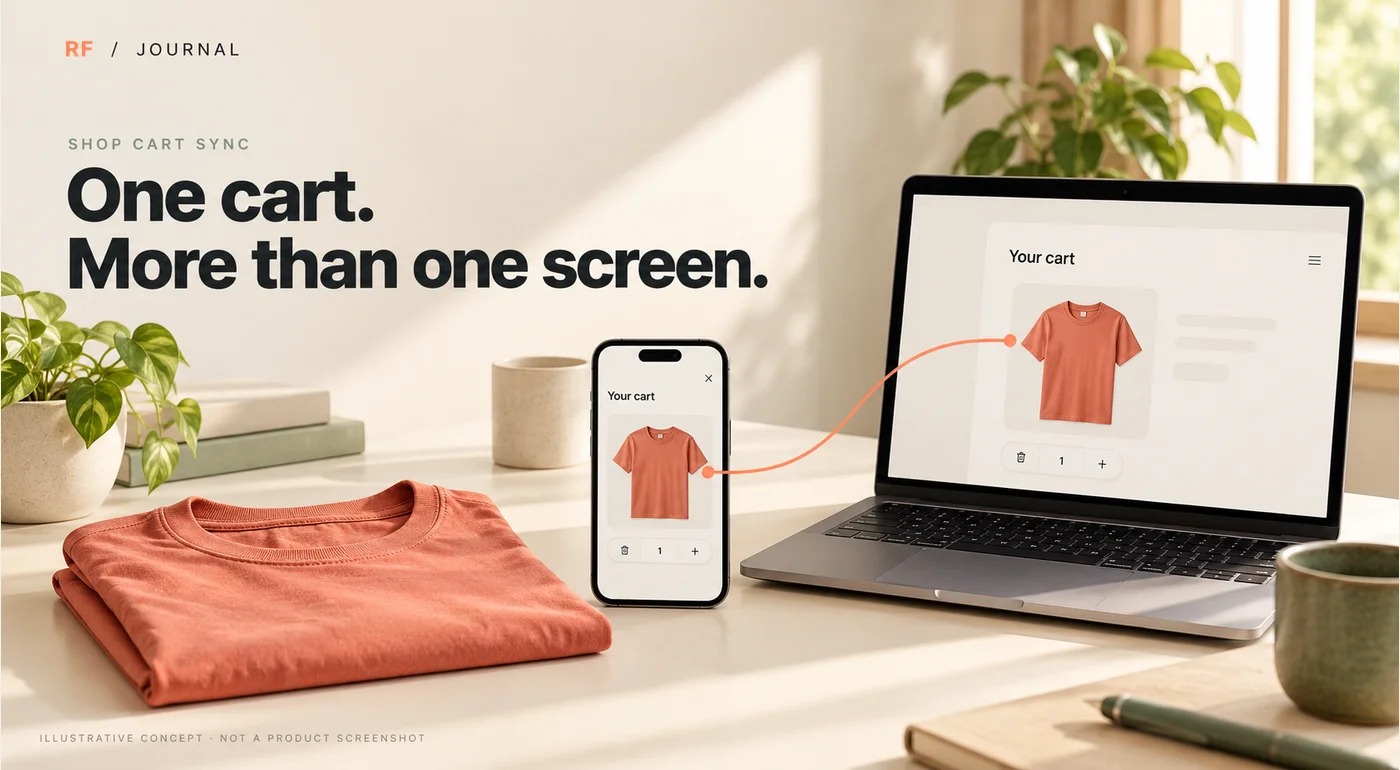
A gift set looks simple on a product page: a shirt, a cap and one convenient purchase. Behind that page, somebody still has to count the shirts, reserve the caps, pick the right sizes and explain what happens when the customer returns one item.
That is where a Shopify bundle becomes an operating decision. Before promoting it, define the components, the availability rule, the selling price and the fulfillment instructions. Then test the complete order. A polished photograph cannot rescue a set that the warehouse cannot assemble.
This guide proposes a launch process for a small store using Shopify Bundles. The examples are fictional planning exercises, not results from a client store. Platform documentation was checked on 22 October 2026.
Choose a bundle that removes a buying decision
Start with the customer's task. A travel kit might remove the work of checking whether a pouch fits a particular bag. A starter painting set might collect the brushes and materials a beginner needs. A clothing multipack might make replenishment easier.
Write one sentence explaining why the items belong together. If the answer is only that several slow sellers need to leave the building, reconsider the offer. Customers do not owe the stockroom a favor.
For the first release, choose a set with a manageable number of decisions. Every extra size, color or interchangeable item creates another combination to explain and verify. A fixed starter kit can be easier to operate than a build-your-own collection, even when the latter looks more impressive in a presentation.
Shopify describes its first-party Bundles app as a tool for fixed bundles and multipacks. Do not assume that every configurable bundle experience in another store is a feature of this app. Confirm the intended bundle type before choosing an implementation.
Make a component sheet before making the banner
Create a small specification that the merchant, developer and fulfillment team can all read.
| Decision | Fictional weekend set example | Person who confirms it |
|---|---|---|
| Contents | Two cotton shirts and one cap | Merchandising owner |
| Choices | Shirt size; fixed cap color | Product owner |
| Substitutions | No automatic replacement | Customer service lead |
| Packing | One carton with component checklist | Fulfillment lead |
| Price review | Recheck when component costs or prices change | Commercial owner |
| Returns explanation | Explain the actual component return process | Operations owner |
Use real variant identifiers in the working sheet. A title such as “coral shirt” can change. The person picking an order needs an unambiguous match between the selected variant and the physical item.
Also decide whether the image shows precisely what is included. A cap, a box and a decorative bottle can accidentally look like a three-item offer when only two items are sold. A short “What's included” list is useful even when the photography is excellent.
Work through the inventory arithmetic
Shopify's bundle considerations explain component-based availability. For tracked components, divide available component units by the quantity needed per bundle, round down and use the lowest result. Inventory settings such as continuing to sell out of stock affect that calculation, so inspect the actual products rather than assuming all components behave alike.
For a fictional set containing two identical shirts and one cap:
- Eighteen available shirts can supply nine sets.
- Seven available caps can supply seven sets.
- The limiting component permits seven complete sets.
That calculation is not a forecast of what will sell. It describes how many complete sets the example stock can supply at that moment. Separate sales of the cap can change the answer. So can a damaged item, an adjustment or another order.
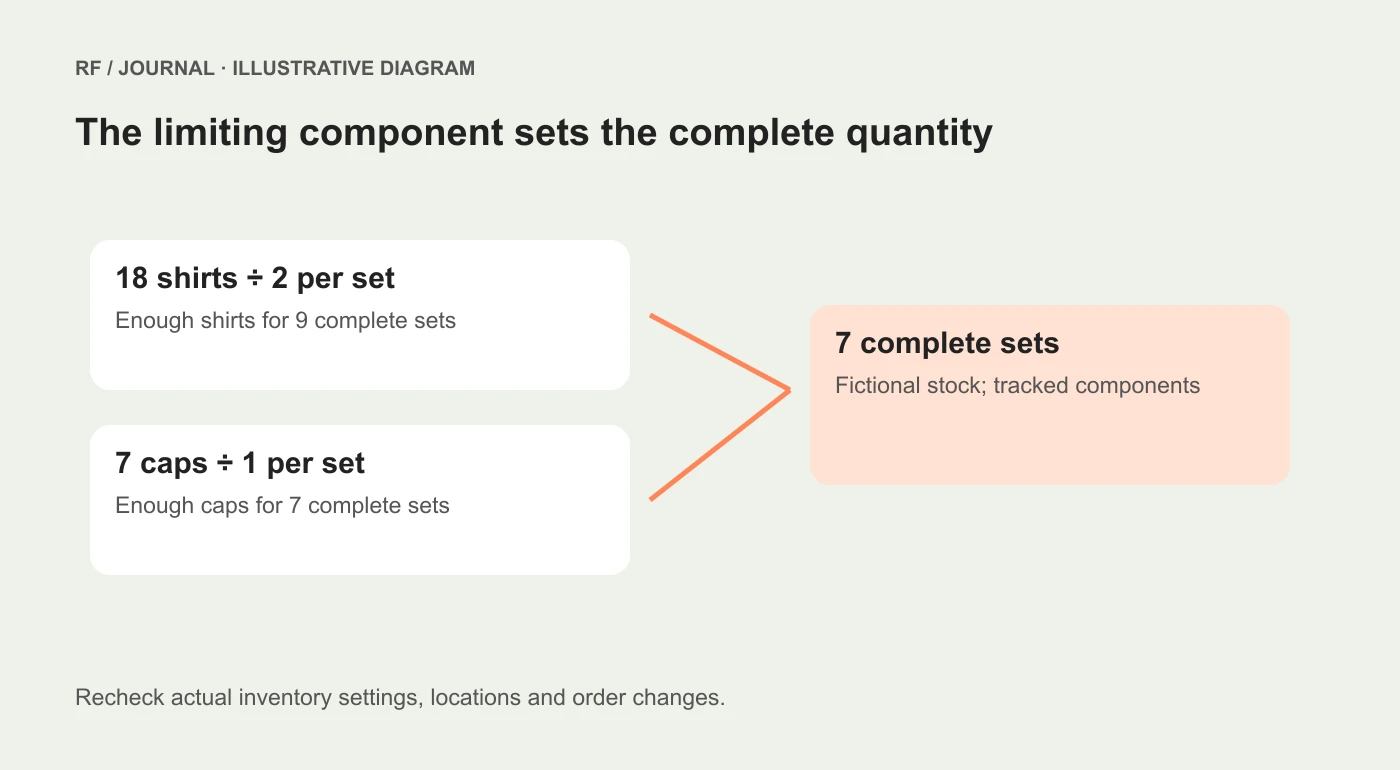
Illustrative stock calculation with invented quantities, not a live Shopify inventory screen.
Review availability with the person responsible for locations and fulfillment. Shopify's current Bundles documentation distinguishes overall component stock from location-level tracking. An aggregate quantity should not become a promise that one particular warehouse can assemble the entire order.
Treat the price as a maintained decision
A bundle price needs an owner. Shopify documents that changing a component's price does not automatically update the bundle price. That makes “we changed the shirt price yesterday” a reason to inspect the set, not a reason to assume it is already correct.
Keep a short price review record containing the components, packaging assumptions, intended offer and review date. The useful question is whether the merchant still wants to sell that exact combination at that price. A spreadsheet with last quarter's figures cannot make that decision for them.
Avoid an automatic discount just because the products appear together. Convenience can be part of the offer. If a savings claim is used, its comparison needs to be accurate and maintained. Ask the commercial owner to verify the reference price and any applicable advertising requirements; this article is an implementation checklist, not pricing or legal advice.
Test discount interactions using the store's actual configuration. Record the expected result before checkout, then compare it with the order. A developer should not have to guess which promotion was supposed to win while the campaign is already running.
Follow the order beyond the storefront
In the current Shopify Bundles documentation, order processing uses component SKUs and derives weight from the components. That is a reason to involve fulfillment early. A single attractive storefront card does not necessarily mean a single line of operational work.
Build a proposed acceptance test around one complete order:
- Choose the intended component variants on the product page.
- Add the set to the cart and inspect names, quantities and price.
- Check an applicable delivery address and the displayed shipping option.
- Complete an authorized test using the provider's appropriate test process.
- Inspect the component information in the order and picking workflow.
- Confirm that the person packing it can identify the exact items.
- Check the customer confirmation for a clear description of the purchase.
Keep payment testing and production customer activity separate. Do not create real charges or fulfillment requests merely to see what happens. Agree on the environment, test method and cleanup responsibility first.
If an external warehouse receives orders through an integration, include that integration in the acceptance criteria. A correct Shopify order is necessary, but the downstream team still needs usable instructions. Read our integration and app audit guide when mapping those dependencies.
Decide what happens when the set stops being a set
Before launch, write answers to the awkward questions. Can a customer return the cap but keep the shirts? How will support explain the amount due back? What happens when the chosen size becomes unavailable? Who approves a substitution?
Shopify documents bundle return considerations and restrictions, including limits around exchanges. Check the current platform guidance and the actual returns tools before promising an operation the store cannot perform.
The policy explanation should match the implemented process. A broad sentence saying “easy exchanges” is not useful if the support agent has to cancel and rebuild several records to carry it out. Our returns and exchanges workflow checklist helps map that wider journey.
Release one set and keep the evidence
The first launch can be narrow: one offer, defined components and a recorded test. Save the product URL, variant choices, expected total, order reference and fulfillment confirmation in the project record. This is evidence of the checks performed, not evidence of improved conversion.
After launch, review customer questions, component shortages, packing corrections and the commercial result. A larger order value alone does not explain whether the set is worthwhile. Packaging work, returns and support can also matter.
Expand only when the team can operate the first offer confidently. A good bundle makes purchasing easier for the customer and keeps the remaining complexity visible to the people doing the work.
AI-assisted editorial guidance. Original illustrations are conceptual, not client evidence. Platform documentation checked 22 October 2026.