A car leaving the ground is a memorable demonstration. It is also a very different thing from a car you can buy, register and use to fly over traffic. That distinction matters more than the most dramatic frame from a launch video.
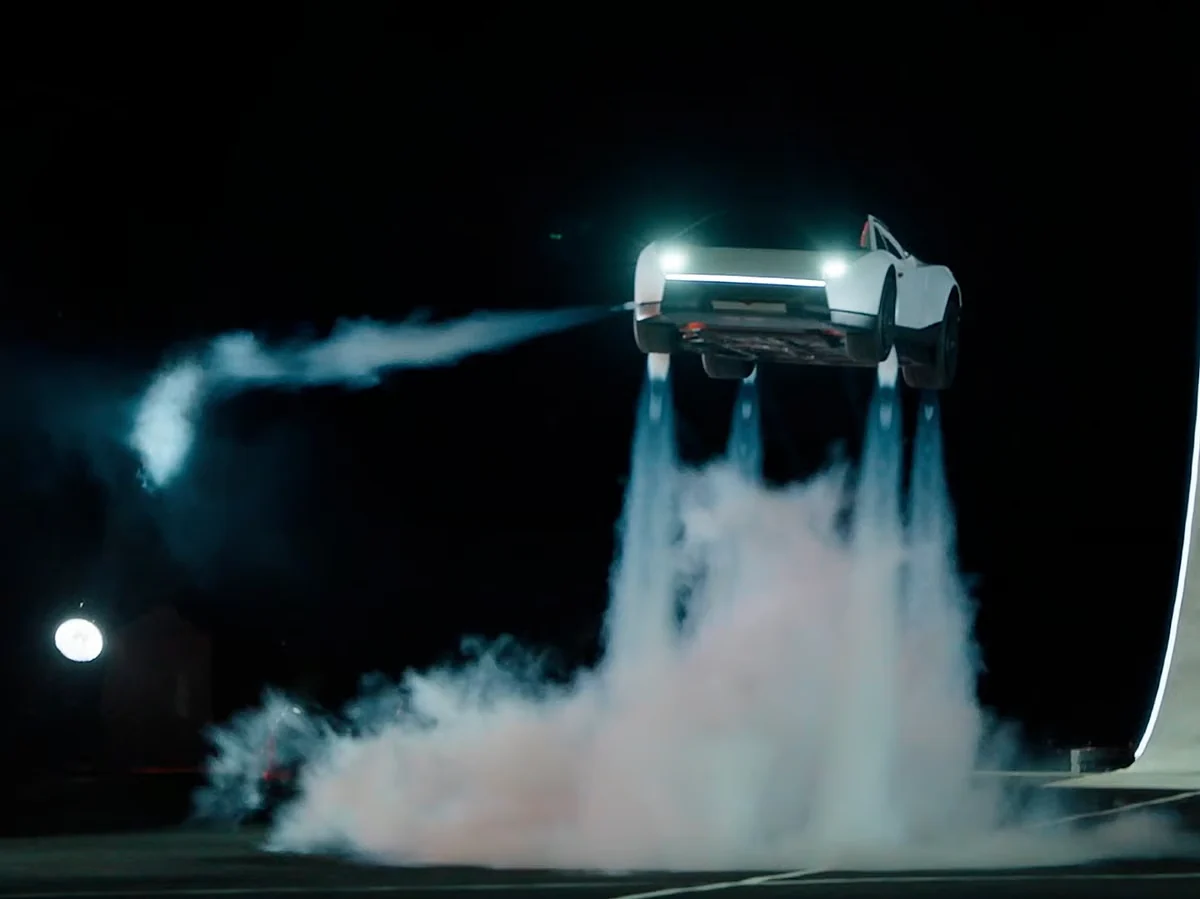
At Tesla’s October 15, 2026 Roadster unveiling in Texas, the company demonstrated an airborne version of its sports car. Launch reporting describes thrusters and a fan-assisted system. Musk gave 2028 as the production target. Those are significant developments, but neither the demonstration nor that target establishes everyday flying-car availability.
Our assessment is straightforward: this is an interesting technology demonstration with an unfinished product story. The useful questions concern the customer version, repeatability and operating limits. A headline that simply announces the arrival of flying cars leaves those questions unanswered.
Analysis checked on 16 October 2026. The lead image is a supplied demonstration still; historical photographs below are dated separately. This is not a hands-on vehicle review.
Start with the meaning of “flying car”
The phrase can describe several different things. One is a road vehicle capable of a short airborne maneuver. Another is an aircraft that can also travel on roads. A third is a passenger aircraft promoted as an alternative to driving, even though it cannot drive on a street at all.
These products solve different problems. A short demonstration might answer whether a particular machine can lift itself in controlled conditions. An everyday transport product must answer where it can operate, who can use it, how it behaves when something fails and what happens between one journey and the next.
The Roadster discussion becomes clearer when we describe the specific behavior rather than using one label for every possibility. “Airborne demonstration” tells readers what kind of evidence they are considering. “Flying-car revolution” is a prediction about adoption, infrastructure and daily use. The first does not establish the second.
This does not diminish the engineering. It makes the achievement easier to evaluate on its own terms.
Separate the event from the purchase decision
There are three useful columns to keep in mind when reading a launch announcement.
- Demonstrated: the behavior shown by the vehicle at the event, under the event’s conditions.
- Announced: the features, configurations and production plans described for the product.
- Still to establish: what customers will receive, how consistently it will perform and where it will be usable.
Moving a statement between these columns requires evidence. A stage demonstration does not automatically become an available feature. A production target does not automatically become a delivery date. A reservation opportunity does not automatically mean the final specification is fixed.
For this reveal, our priority is to keep the limited event facts separate from the much larger ownership questions. We are not treating a launch presentation as independent validation of performance, durability or safety.
Why the production target needs careful wording
The difference between “production is targeted for 2028” and “customers will receive flying cars in 2028” is substantial. The first describes an intention. The second promises an outcome and adds an assumption about which version will arrive.
A buyer would need to know when production begins, how it ramps, which configurations are built first and when a specific order could be delivered. A company might also change equipment or operating restrictions between a demonstration and a customer vehicle.
Those are ordinary product-development questions, not a prediction that the project will succeed or fail. Until the company provides firmer information, precise uncertainty is more useful than either enthusiasm or cynicism.
We would also avoid repeating older price or performance figures as if they necessarily describe the newly revealed car. Launch coverage contains differing configuration descriptions. This article deliberately does not present a definitive trim count, final price or independently verified acceleration figure.
The questions a useful follow-up should answer
What is the exact customer configuration?
Names such as “Roadster” or “SpaceX package” are not enough by themselves. Readers need a specification tied to a particular version, with a clear distinction between standard equipment, optional equipment and demonstration-only hardware.
An especially useful comparison would show what the ordinary driving version shares with the airborne demonstrator and what differs. Without that comparison, a video can unintentionally become the specification sheet for a different vehicle.
What does repeatable use look like?
One successful maneuver leaves many ordinary-use questions open. How is the vehicle prepared? What checks are required? What limits apply to the setting? How does it return to a ready state afterward?
These are questions for documented testing and operating information. We do not have the evidence to supply numerical answers, and filling the gaps with estimates would make the article less useful.
What is the intended purpose?
A spectacular sports-car feature can be valuable as an enthusiast experience without being a solution to commuting. A technology designed for controlled demonstrations should be assessed differently from a system intended to transport people between destinations.
The strongest argument for a product should describe the actual use case. If the use case is entertainment or an unusual driving experience, that can be stated directly. It does not need to become a claim about replacing city transport.
Why older Roadster photographs can mislead
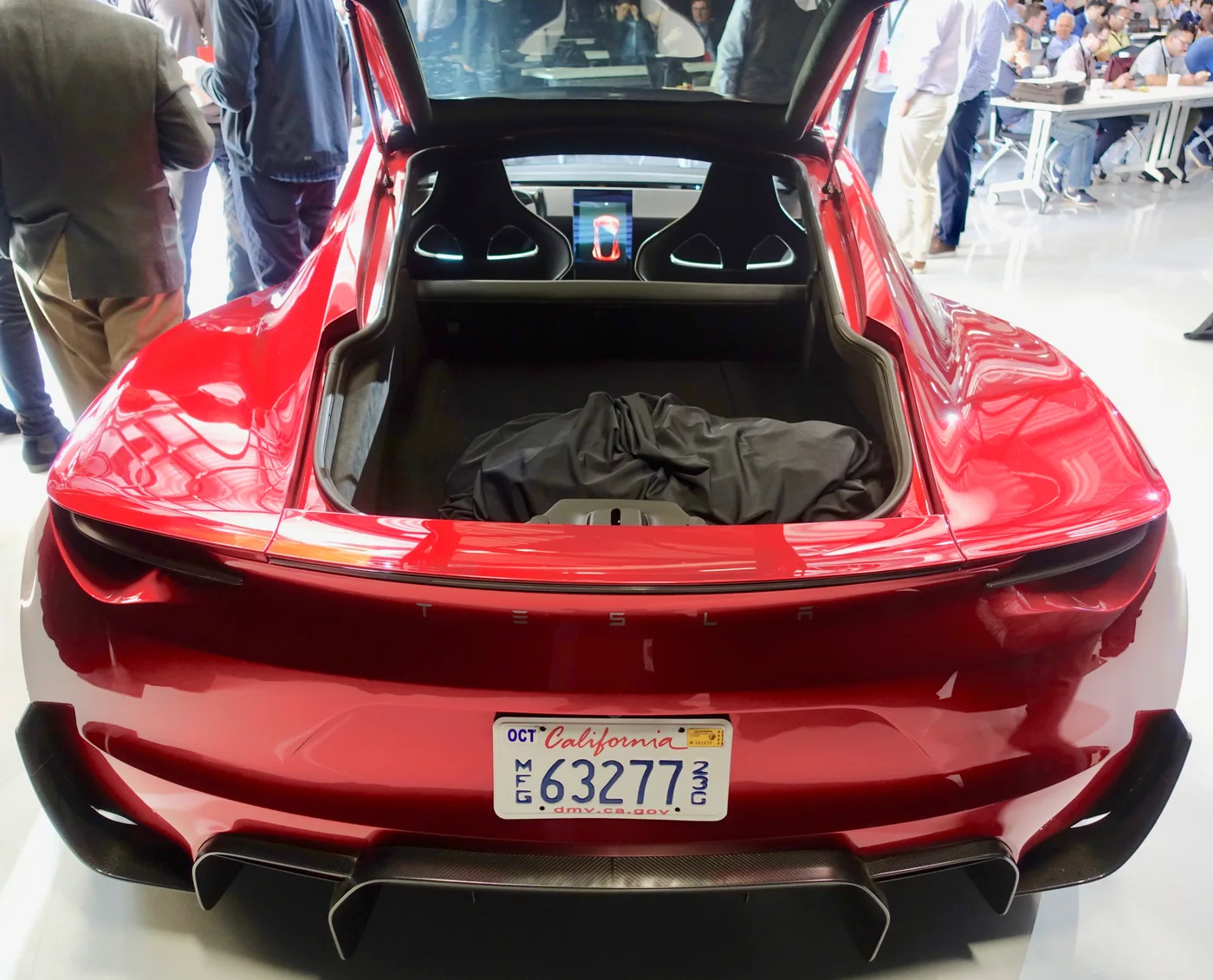
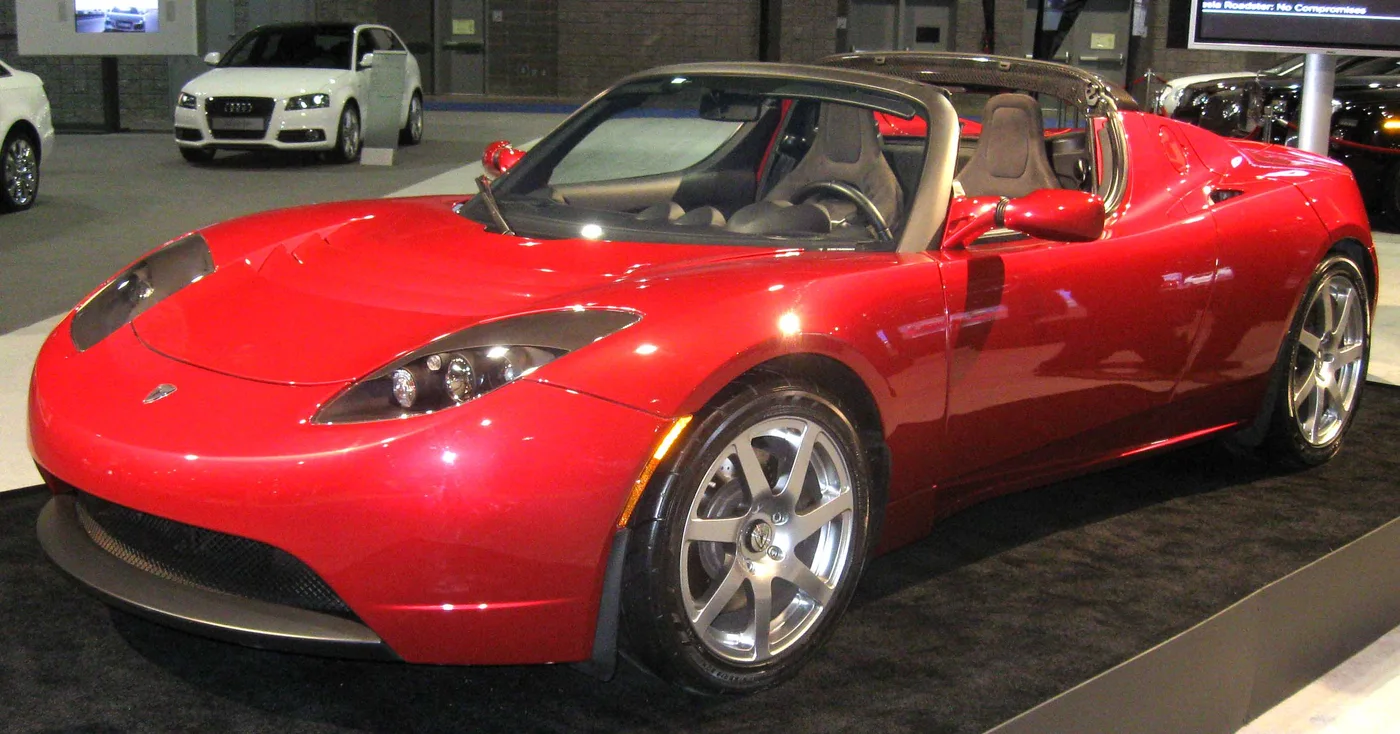
Several different vehicles can appear in a search for this story: the original Roadster, the later prototype shown before this reveal, and the car carried into space in 2018. They are connected by a name and a company, but they are not interchangeable evidence.
An older prototype photo can explain the project’s history. It cannot prove the appearance or equipment of the October 2026 demonstrator. The space photograph is genuine, but it records a rocket payload, not a road car taking off under its own power.
That is why each photograph here carries its historical context. We have not generated an image of a flying Tesla, inserted artificial thrusters into a real photo or presented an archive picture as a frame from the latest event.
Our view: interesting engineering, incomplete everyday-use evidence
There is room to be impressed by a demonstration while remaining undecided about the product. Those positions are compatible. Curiosity asks how a system works; a buying decision asks whether the complete ownership proposition makes sense.
For now, the event is a reason to follow the project rather than a reason to assume that personal airborne commuting has arrived. The most valuable next information would be a final customer specification, documented limits, repeatable testing and a delivery plan tied to the relevant configuration.
For businesses watching the launch, there is another useful lesson: a product page should explain the gap between a demonstration and availability. That gap is where customer expectations are formed. Clear status labels and explicit limitations can communicate ambition without asking readers to guess what is already real.
The Roadster story deserves attention. It also deserves accurate verbs: demonstrated, announced, targeted and delivered each mean something different.
For the separate engineering questions and evidence limits, read the Roadster thruster explainer.
For a website-team perspective, see the analysis of product-page promises and trust.